Voordeconsument
Introduction:
I recently had the chance, as a software engineer, to work on an intriguing project for a customer who had a novel company concept: an energy comparison website. This project provided me with both difficulties and enjoyable experiences as I learned about site scraping, WordPress development, and API integration. I'll provide a first-person description of how I approached and completed this project in this blog post.
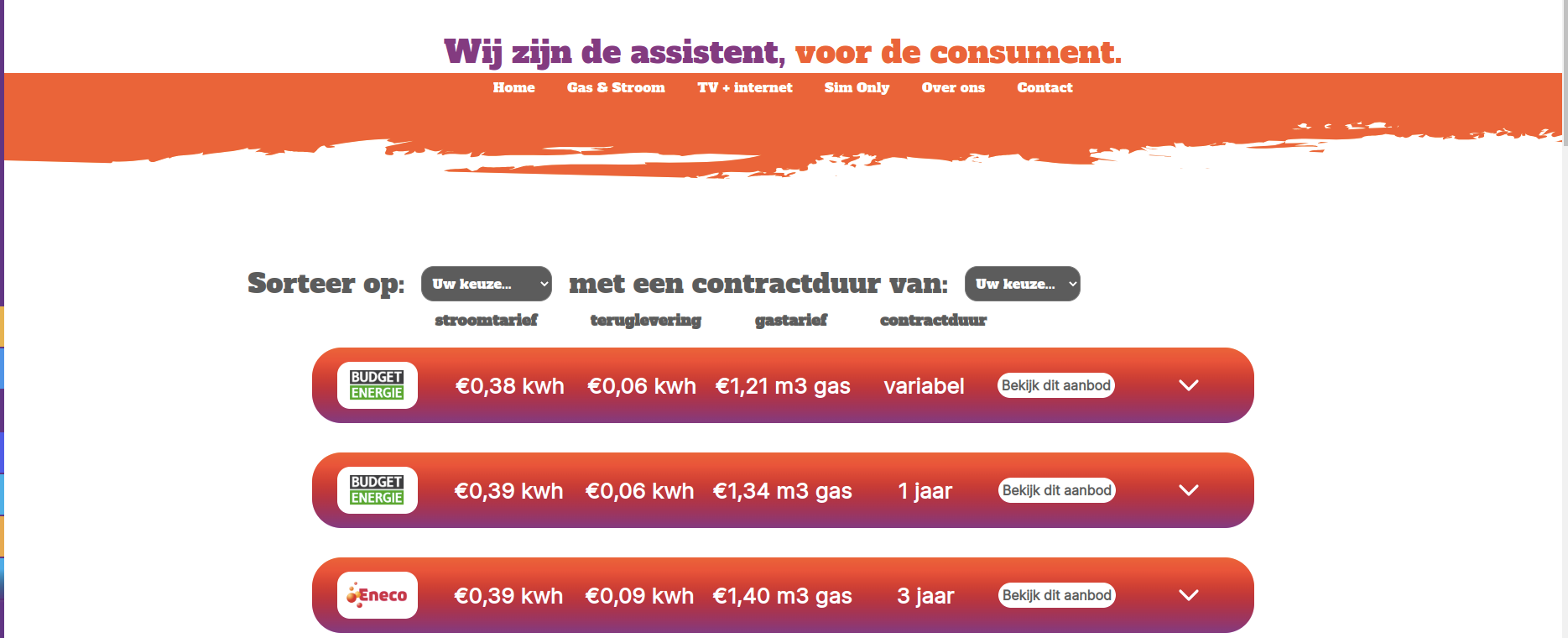
Understanding the Client's Vision: My client had in mind a platform that would make comparing energy suppliers simple, enabling customers to take well-informed selections. Web scraping had to be integrated in order to collect information from various energy provider websites, and a user-friendly WordPress interface had to be created so that users could access and examine the data that had been gathered.
Web scraping and WordPress in Uncharted Territory:
I started by immersing myself in study because I had never used web scraping before. I mastered the art of parsing and website navigation programmatically by using Selenium with Python to extract data. I also reviewed my WordPress knowledge in order to ensure a seamless integration of the scraped data.
Creating the Technical Solution: I chose a variety of tools to meet the client's requirements. I used Python and Selenium for web scraping, and I used regex to clean and format the retrieved data. I created a powerful API to connect the frontend and the scraped data on the backend using the PHP framework CodeIgniter.
Putting the Pieces Together - Development and Design:
I took the project on in stages. I started out by concentrating on data scraping from several energy provider websites. This required overcoming difficulties including handling various website structures and dynamically loaded material. I used custom HTML and CSS within WordPress to create a user-friendly frontend using the data I had gathered. A smooth user experience across devices required responsive design.
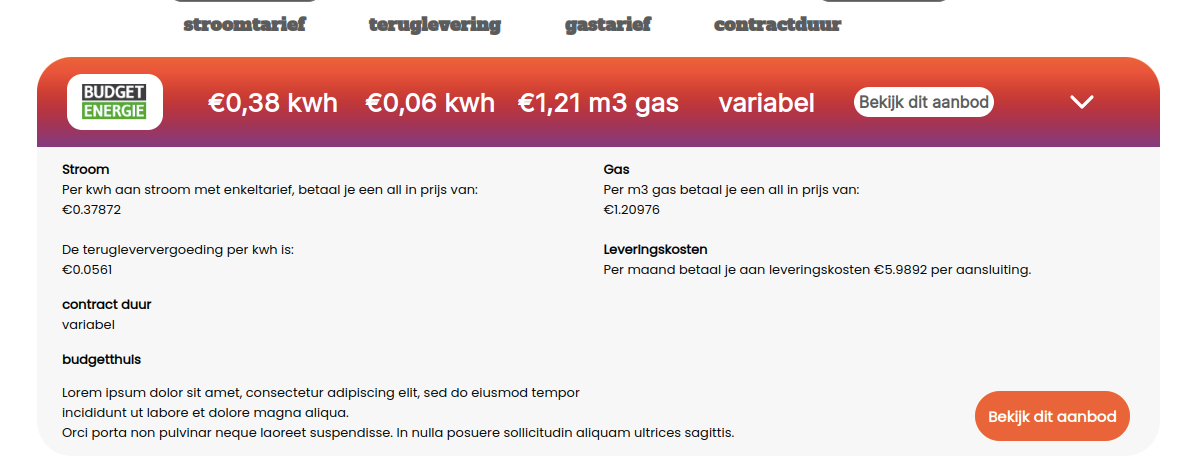
Integration and Iteration: A crucial step in making it work was integrating the frontend with the API. I made sure that the data flow was swift and easy so that consumers could obtain real-time data with ease. As I directly cooperated with the customer to incorporate comments and make necessary improvements, regular testing and iterative refinements were essential.
My journey to build the energy comparison website was a mix of research, education, and practical problem-solving. With the help of site scraping, WordPress development, and API integration, I turned a concept into a useful platform that enables consumers to choose energy suppliers based on solid information. The significance of flexibility, research, and productive client communication was highlighted by this project. Looking back, I'm proud of the practical knowledge I've acquired and the influence my work has had on users' ability to understand a challenging decision-making process.